July 2026
Summer Running With Us
Summer Training Runs and Fun Runs
We had a great turnout for our first Summer Training Run of 2026 on May 30. This year Fleet Feet has joined up to help support these runs. It's great to see their people out helping us and bringing new runners to this group. The options included 5.75 miles for the Half Marathon training, 7 miles for the Full Marathon training, along with a 6.2 (10k) route. The runs will continue every Saturday morning at 7:00 am at Telulah Park. This location is ideal given the beautiful park and accessibility to numerous trails, parks and street options. The route lengths for those training for the September Community First Fox Cities Marathon Half and Full Marathons will generally increase every week. There is a nice 10k route that can be used each week, and many options to create 5k or other distances desired. Remember to get your self registered for Community First Fox Cities Marathon here. This event is quite popular with the Pacesetters, and in our community in general. It's nice seeing so many familiar smiling faces and friends at the start and finish lines.
Also, please join us the second Wednesday of each month through this fall for our FUN RUNS! These are 6:00 pm evening runs, the locations vary each month:
- July 8 - City Park, Appleton, featuring post meal from Victorias Restaurant
- August 12 - Telulah Park, Appleton
- September 9 - Jefferson Park, Menasha
See our Pacesetters website Fun Run page for route maps and more info.
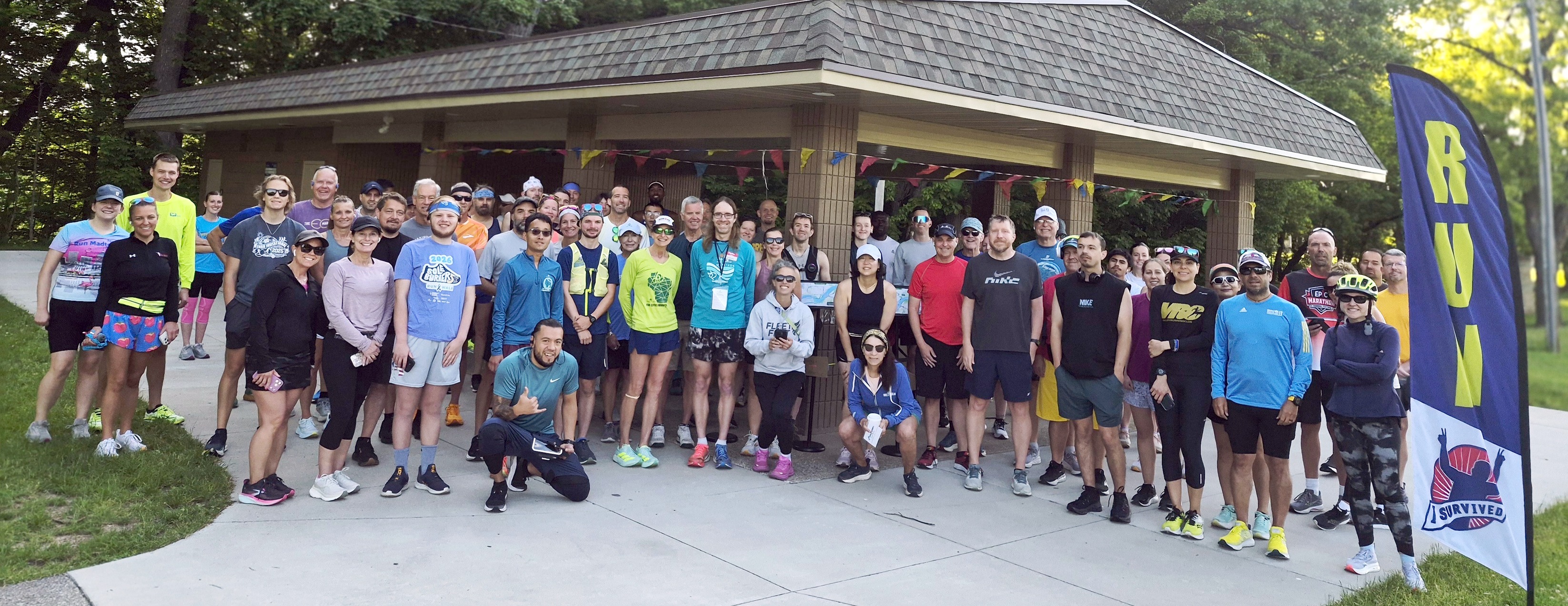
May 30, 2026 Kickoff Pacesetters Fox Cities Marathon Training Run
Pacesetters Member Spotlight - Boston Marathon First Timers Experience
Pacesetters members Jeff Stillman and Steve Kleman travelled to Boston this past April to participate in the 130th Boston Marathon. They shared their experience with us.
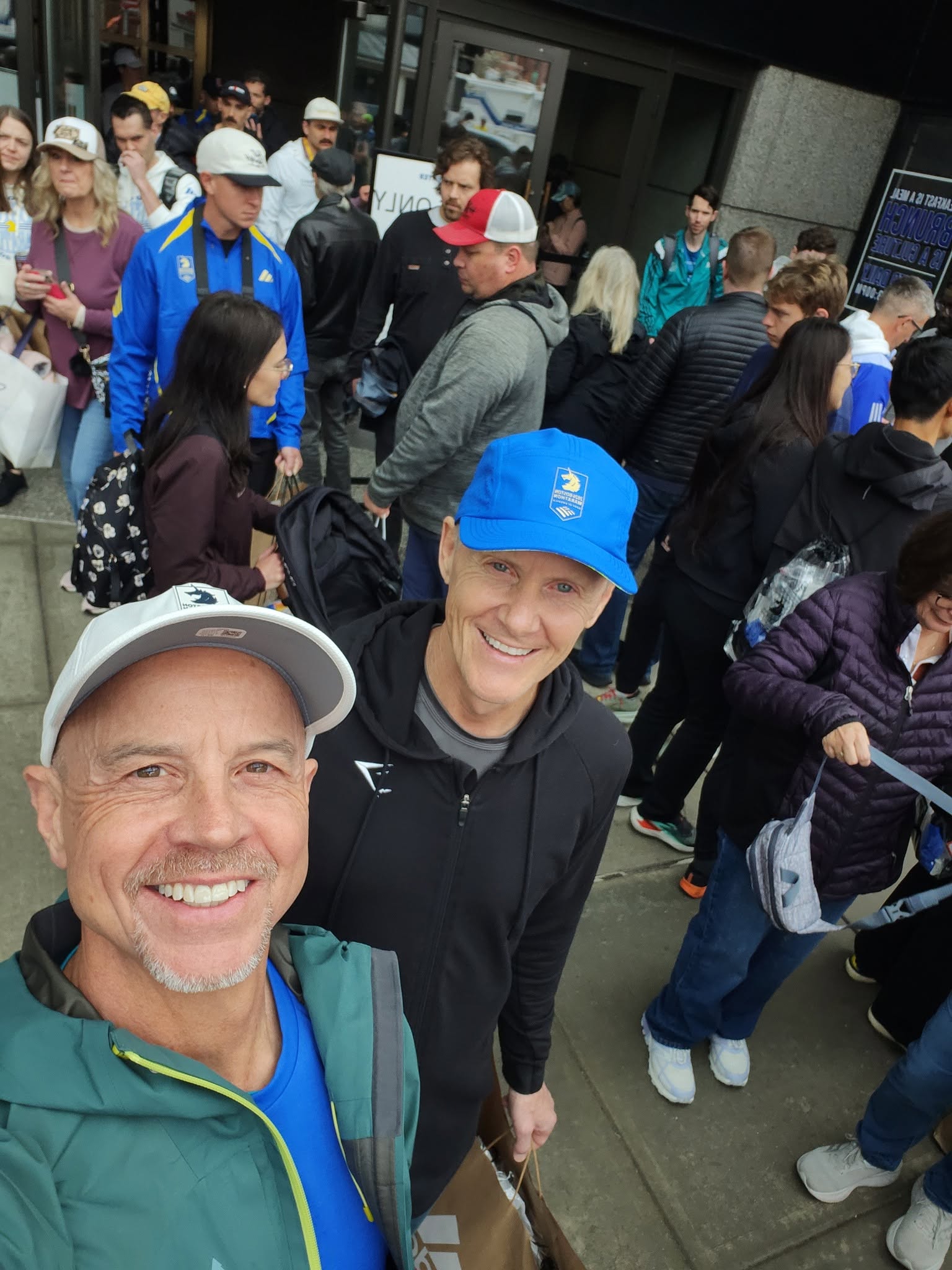
As they left their hotel on race day morning, it really set in just how big this event was. It would feel like a long time to get to the starting line 26 miles away. There were buses and people everywhere as everyone came from their respective hotels. Although the race would not start until 11:00, they had to get to the busing area by 8:00. There were 50 squares per bus, color coded, so you had to stand in one of the correct squares and wait there before climbing aboard. That was surprisingly very well organized, the squares would fill, then people would get in, and soon after the bus would be on its way. The one hour bus ride dropped you off at Hopkinton Middle/High School, the staging area near the starting line.
By that point it was 9:30, and they realized there really would not be much of a chance to get warmed up, needing to make there way over to find their starting corral. This year they expanded from 4 to 6 waves, and within each wave there were about 6 corrals. It was delightfully chilly, about 47 degrees, so they wore extra layers. As is typical at many big marathons, participants were encouraged to peel off their outside layers which would be donated to local thrift stores and people in need. There were clothes strewn all over the place.
For the first 5 minutes of the race runners were bunched together fairly tightly, so it was best to understand that no one was going break away, just relax and run the pace of those around you. Both Steve and Jeff felt they were in the right starting place, that the speed seemed about right for them. For about the first 5 to 6 miles they were pretty much elbow to elbow with other runners. They could tell this was an internationally popular event by the fans out on the course, with their encouraging words on their signs written in Japanese, German and other languages.
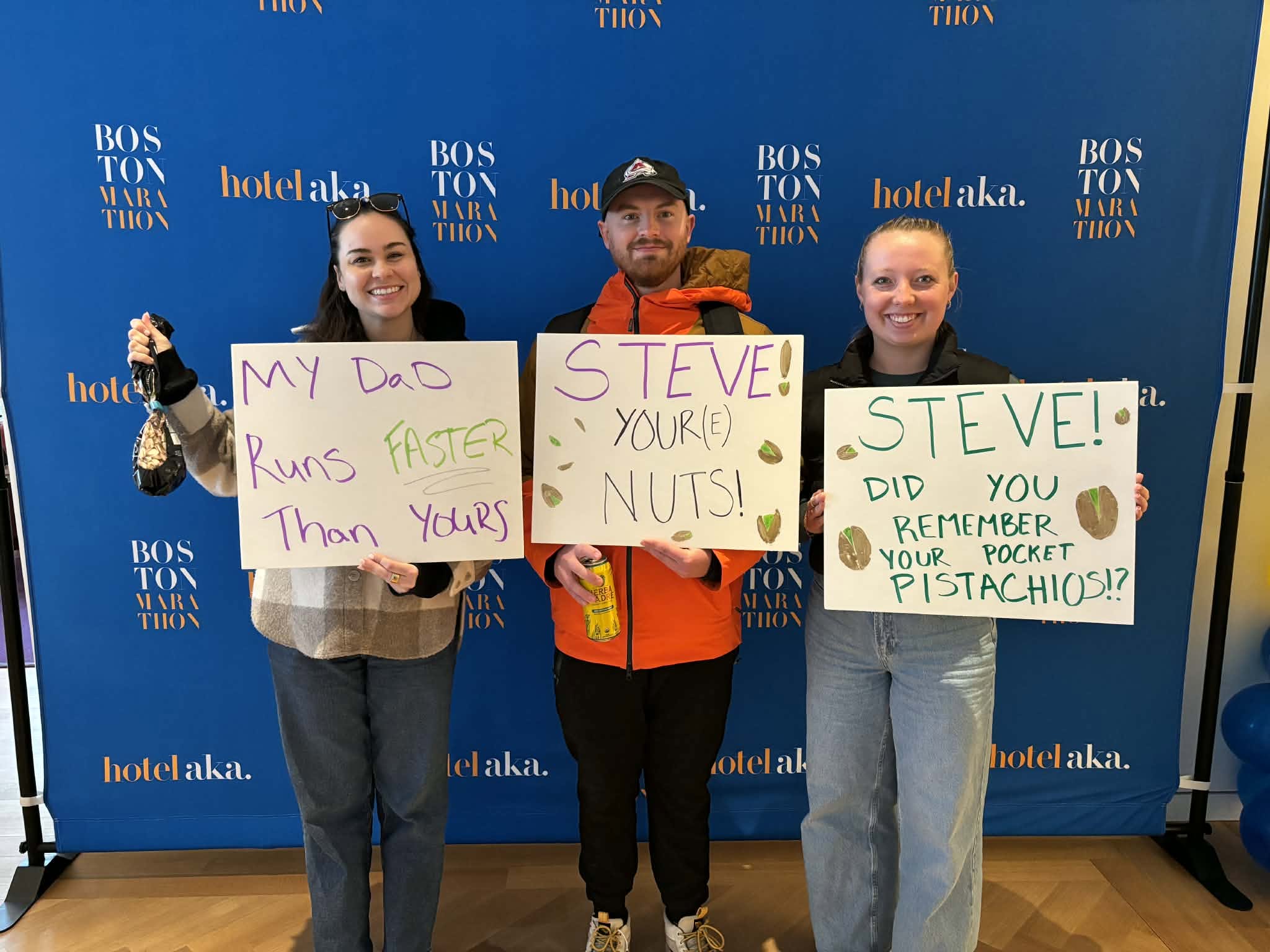
Steve and Jeff felt fortunate that they had their families with them for support. Steve saw his 3 times on the course, their personally messaged signs were written in English and made him laugh, while Jeff's were at mile 10 for him. That was uplifting seeing them out there. The personal track your runner app provided their families with very accurate information on how their races were progressing and when they would next be seeing them along the route.
The "Scream Tunnel" at Wellesley College around the halfway point was a real thing. Hundreds of energetic women from the college continued their tradition of lining the street for nearly a mile offering encouragement, high fives, hugs and even kisses. For the record, other than observing, both Steve and Jeff kept their distance. Later in the race they also found the crowd at Boston College to be quite loud.
They were warned to save their legs for hills that would come in the last half of the run. The bus ride to get to the start looked flat, but out running on the course revealed a different story, with some very noticeable hills. These Newton Hills occur between miles 16 and 21, with the peak at mile 20 known as Heartbreak Hill. That was a challenge.
Steve came into this race with just 2 simple goals, first, to finish it, and second, to enjoy it. However he was feeling pretty good towards the end, at which point a third goal presented itself, to finish in less than 4 hours. He had started looking at his elapsed time, pace, and now knew that this was a possibility. Jeff said he was really just happy to be there doing this and did not have a specific target goal in mind, just hoping that he felt strong throughout and ran a good race.
Eventually they could see the iconic Citgo Sign approaching, which has stood there, up high, for over 60 years. It was assuring to know that location is only 1 mile from the finish. However, the 60' x 60' sign is so large that they were seeing it from nearly a mile away, meaning 2 more miles still left!
Next came the Massachusetts Ave. underpass at mile 25.5. The route dips below that, with a short but steep ascent to climb back out. It was eerily quiet there as it's the only stretch of the course without any spectators. Two more turns and they were on the home stretch of Boylston St. On a map that looks like only 3 blocks to the finish line, but they were very long blocks.
Both Steve and Jeff did fantastically well! Steve did reach his 3rd goal with a time of 3:58:44, while Jeff motored along to a 3:45:38 finish. After Jeff missed his Boston cutoff qualifying time last year by 2 minutes, he vowed to qualify for it this year. For motivation, he created a screen saver that said "I Belong in Boston!" He also printed that out so that it was always visible for him while he spent the year after that training. When asked for advice on whether other runners should do Boston, Jeff simply said "Oh yes!!" He will try to qualify and return to Boston again in 2027. Steve is not sure if it's realistic to get back to Boston again next year but will leave that option open for now having certainly enjoyed his 2026 experience.
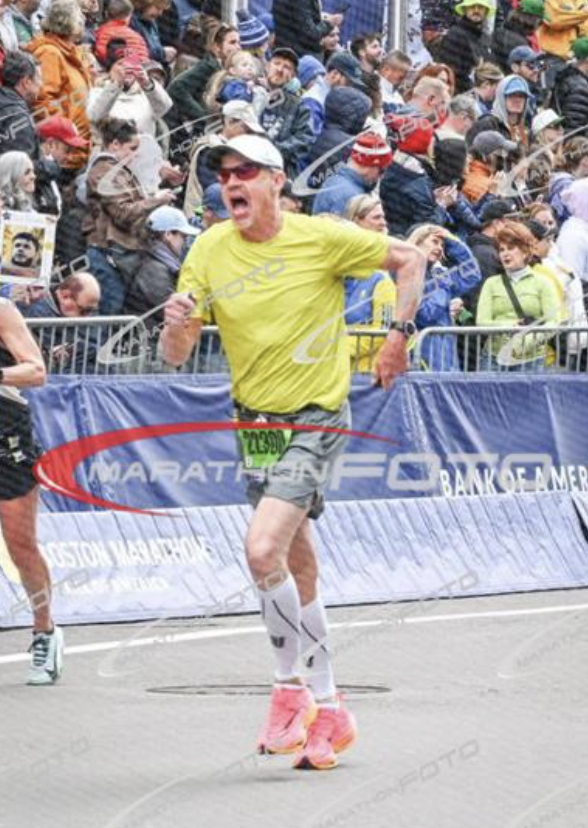
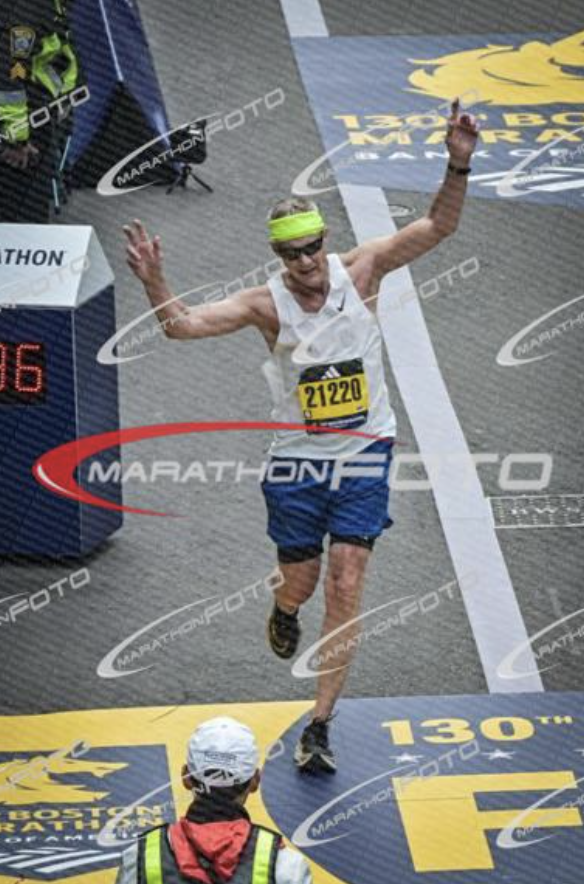
So what advice do they have to offer? Steve says prior training runs are key, make sure you follow the training program, then just show up and go on marathon day. Jeff says if you're doing Boston, talk to others with Boston experience. He is grateful to Boston Marathon vets Susan Baehman and Chuck Shork, who gave him a lot of helpful info about what to expect. Jeff believes in using Maurten goos, he took one just prior to starting, and then consumed one every 3 miles. They also recommend including some slower recovery runs in your training, they should not all be fast runs.
Congrats to Steve and Jeff on successfully completing the Boston Marathon!
Average Mile Run Times
They say that your mile time is a good fingerprint for revealing your fitness level, becoming a great predictive tool of what you can expect for your race times. It's your baseline and a solid reference point. If you're able to improve on it, your runs of other distances will also likely improve. This time is dictated by your age, experience, training habits, and how consistently you show up.
Here is some interesting information showing average running times by age and gender. The data shows specific times for completing one mile. However, perhaps this information should not be shared here. Because a good mile time is different for every runner and walker. And a good measurement for doing well on a run is if you were able to push yourself hard and your body and mind felt good during that mile and then again after completing it. And that measure is what you personally are doing and is not about what someone else is doing.
Well, perhaps your interest level has become elevated, so here is the data anyways. But please take it with a grain of salt, then with a water chaser. It's a good illustration of the natural average decline seen as we grow older. There are many aging runners who become upset with themselves about how much slower they have become compared to when they were younger. Yes, but that's part of grower older. Accepting that we have to realistically temper our expectations. Less focus on your watch and more focus on how you're feeling.
Otherwise the gap between your expectations and reality can become a measure of your unhappiness. The wider that gap, the more unhappiness we may feel. You tell yourself you can still run a 7 minute mile, but you're older and you haven't been running much lately so the reality is that it's taken you 8:30 to complete the 4 laps around that track. Oh no, how unhappy you feel! So in other words, make sure your expectations are realistic, perhaps still a bit of a stretch goal, but at least a target that is within your reach, or close to it.
For elite runners, a good mile lives in a completely different universe than for recreational runners. For most people, a good mile time is not about records. It is about progress. And for beginner runners, their times will be much slower. That's ok. It's not about where you start, but then whether you keep moving forward.
So here you go. Some reference points so you can see where you are at, and where you could go next.
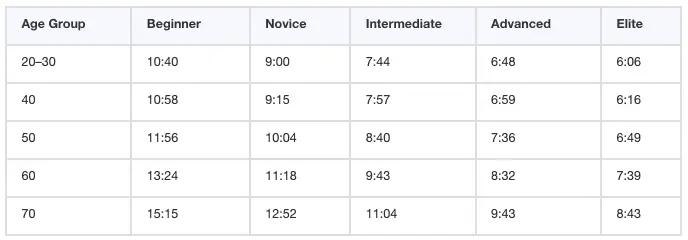
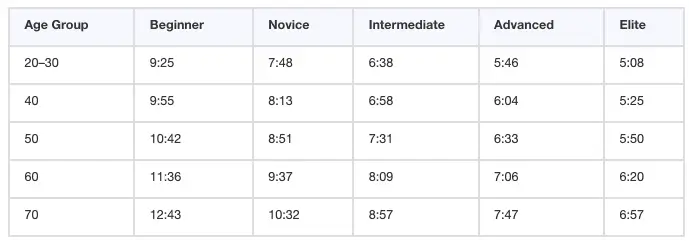
May these numbers help show a clear pattern but in no way be a limitation. Some younger runners will be surprised to see that although performance does gradually decline with age, the shift may be less dramatic than what they expected. Know that this data is less like a scoreboard and instead more like a map. It shows where others have been, but understand that your route is still entirely your own.
While running form matters, it is rarely the main limiting factor for most runners. Strength, endurance and consistency usually have a greater impact, while perfection is not required. Other things that will impact your time include terrain (trails are not the same as smooth surfaces), hills, elevation (gasp!), and weather (headwind and humidity can resist and drain you).
If you wish to increase the speed for your mile time, a key point is understanding it's about building a system that supports getting faster over time. Be consistent, run regularly, and build your weekly distance gradually, to create a good foundation. Strength training will help, especially when you target your legs and your core. Then when you have achieved a consistent routine, introduce more structured purposeful runs, featuring hill repeats and speed work, incorporating bursts of speed intervals in your workouts. Running faster changes how you experience effort, creating a psychological benefit. A faster pace that once felt challenging (or even unreachable) begins to feel more controlled and comfortable. What previously required a massive amount of focus and effort now becomes something more routine for you to achieve.
Once you regularly mix in these methods and mindsets, you will see your running journey evolve into something unimaginable when you first started this journey.
(Information courtesy of The Running Week)
Swedish Carbs Product Becoming Popular With Distance Runners
When Sebastian Sawe broke the 2 hour barrier at the London Marathon earlier this year, much of the media focus was centered on carbon plated shoe technology as being the key factor. When asked about his performance, Sebastian's reply said a lot, saying it's not about the shoe, it's about the goo.
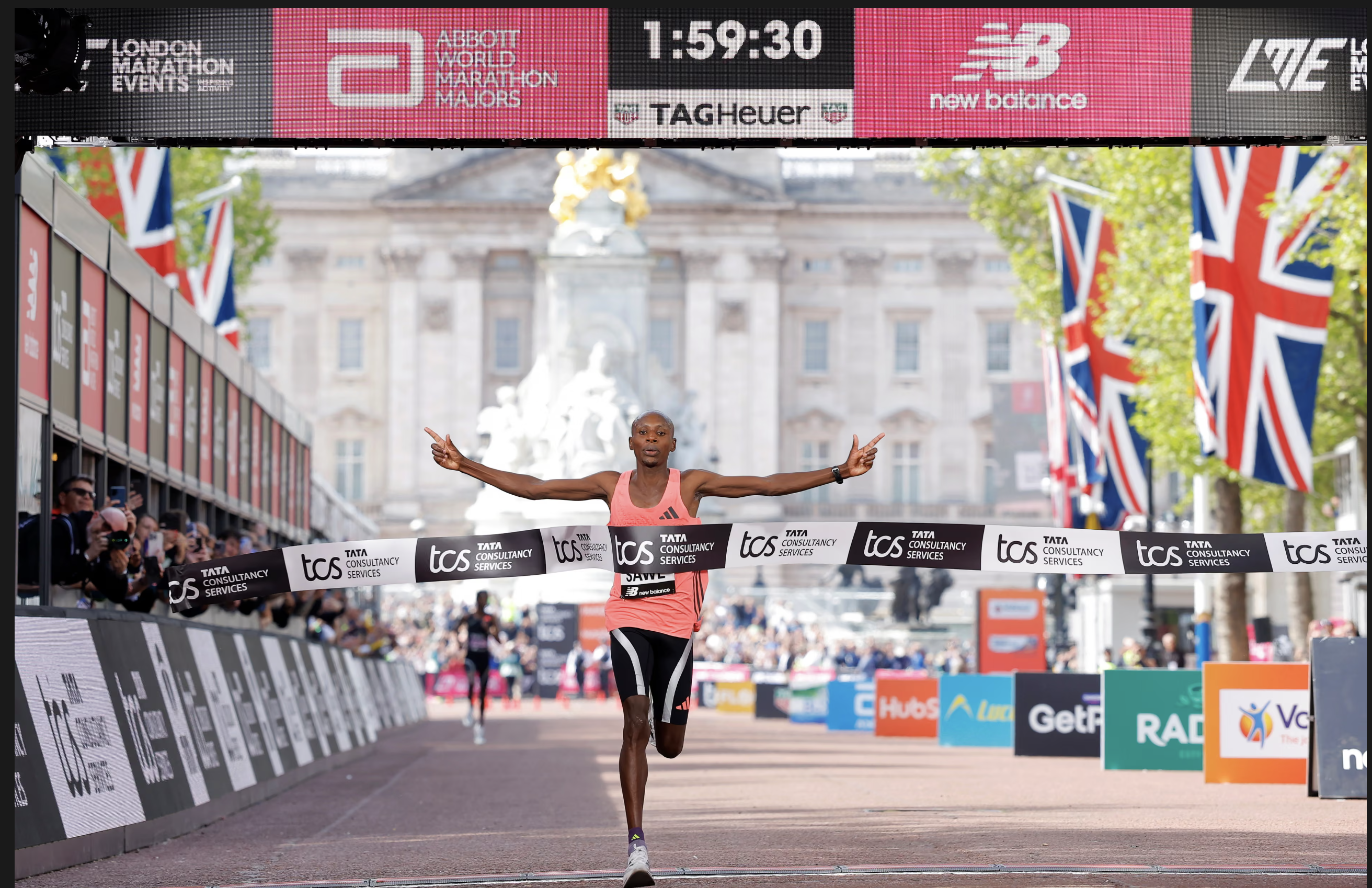
 A sports nutrition product from a Swedish manufacturer has gained worldwide attention. While the feet of elite marathon finishers can be found in many different shoe brands, Maurten has a stronghold on nutritional products. Since 2018, every men's and women's world record has been run by an athlete using their product. At this year's London Marathon, 7 of the top men and 5 of the top 6 women had an official relationship with Maurten.
Maurten claims that their "products are developed to help athletes bypass their fueling limitations." By encapsulating carbohydrates in the hydrogel, it in effect bypasses the stomach and is absorbed directly in the intestine. That process allows greater amounts of carbs to be consumed during an event without experiencing the gastrointestinal problems seen with most other sports drinks. Athletes have said it feels magical in the way they can be drinking something but yet it seems to disappear inside them.
Before anyone jumps in head first and starts using Maurten products at their next marathon, understand that like trying anything new, one has to acclimate. Think of your gut as a large muscle, that you have to train just like you train your leg muscles when running. If you decide to give this product a try, it's best to start gradually, using it during training runs to see how your body handles it. Stick with the motto, nothing new on race day. While using sparingly initially during training, if you are not experiencing any gastro issues, you can slowly increase the frequency and amount you're taking.
We would love to hear from you about your experiences using this product, or other products you have had success with.
Protein Energy Bites Treats - July
The recipe for the month is Strawberry Peanut Butter High Protein Energy Bites.
First gather up your ingrediants:
- 1/2 cup honey
- 1/2 cup peanut butter
- 2 tsp vanilla extract
- 3/4 cup peanut butter powder
- 1/2 cup whey protein powder, unflavored
- 1/2 cup quick oats
- 1/2 cup freeze dried strawberries, broken up a little
- In a medium bowl, mix together honey, peanut butter and vanilla extract
- Add peanut butter powder and protein powder, mix well
- Add oats and freeze dried strawberries, mix well
- Roll into 18 balls
- If protein bites are too soft, refrigerate for the perfect texture
The best part about these treats is that there are 9 grams of protein in just one bite!